Skip to content

Reviews

2026 Top Kids Bed Trends What Global Buyers Need to Know?

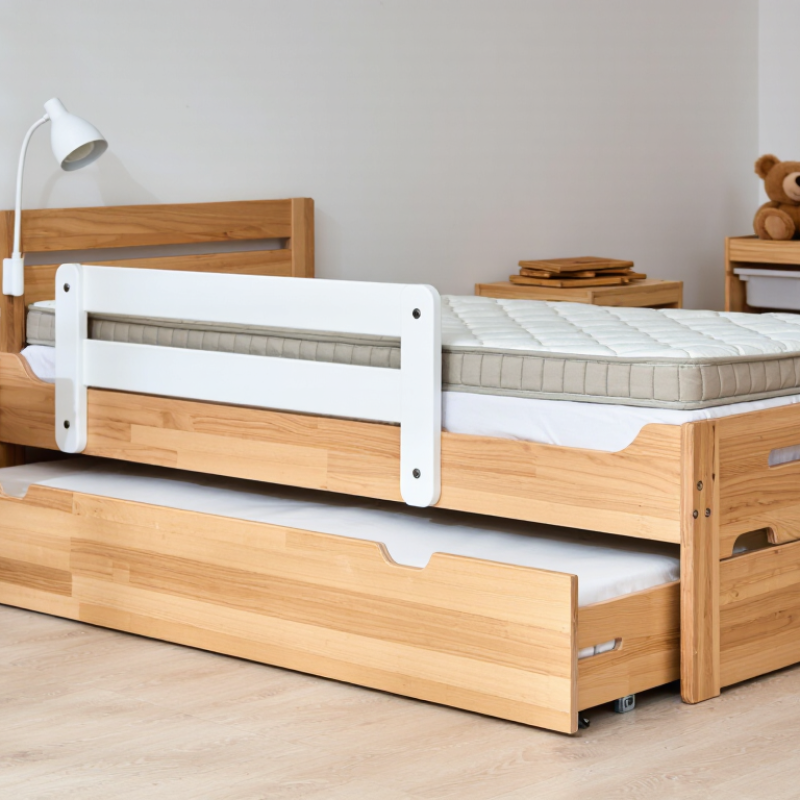
The 2026 Kids Bed market is moving beyond bright colors and simple frames. Global buyers now want safer designs, flexible functions, and stronger proof of quality. A bed may include hidden storage, adjustable rails, reading lights, or a compact desk. However, every added feature needs careful testing. More functions can also create more failure points.

Dr. Harvey Karp, pediatrician and child-sleep expert, has said, “The safest place for a baby to sleep is on a firm, flat surface.” This principle remains important for every Kids Bed category, even as children grow older. Buyers should examine mattress support, guardrail height, edge finishing, ventilation, and assembly strength. They should also request test reports, material declarations, and clear age recommendations from suppliers. Safety is not a visual feature.

Sustainability will influence purchasing decisions in 2026. Buyers may prefer certified wood, water-based coatings, recycled packaging, and replaceable hardware. Modular beds can reduce waste because families may reuse parts after a child grows. Still, “eco-friendly” claims require evidence. Marketing language is not enough.

Regional preferences will remain different. European buyers may emphasize compact dimensions and minimalist styling. North American buyers may seek storage and larger sleeping surfaces. Asian markets may favor multifunctional designs for smaller rooms. One global design may fail locally. That is a useful warning.

The strongest suppliers will combine practical experience, transparent documentation, and responsive after-sales support. Trends matter, but children’s comfort matters more. The best Kids Bed is not always the most impressive one. It is the one that works safely in real homes.
2026 Top Kids Bed Trends What Global Buyers Need to Know?

Market Forces Shaping Kids’ Beds in 2026

Market Forces Shaping Kids’ Beds in 2026

Children’s beds are moving from simple furniture to adaptable, space-saving products. The United Nations World Population Prospects 2024 reports global fertility at about 2.25 births per woman in 2024. Fewer children in many markets may increase demand for longer-lasting beds, not larger volumes. Urban households also face smaller bedrooms. OECD Family Database data shows that housing costs remain a major pressure for families across many developed economies. Buyers may prefer bunk beds, storage drawers, and adjustable frames that survive several growth stages.

Safety and sustainability now influence purchasing decisions. The U.S. Consumer Product Safety Commission continues to highlight entrapment, fall, and mattress-fit risks in children’s furniture. Global buyers should request test records, material declarations, and clear assembly instructions. Euromonitor’s 2025 Home and Garden analysis points to stronger interest in durable, repairable household products. Yet “eco-friendly” claims can be vague. That weakness deserves more scrutiny. Recycled content alone does not prove safer materials or lower emissions.

Tips: Measure the room, staircase, and doorway before ordering. Check guardrail height and mattress compatibility. Ask whether replacement parts remain available. Avoid designs that look attractive but cannot adapt. A beautiful bed may become waste after two years. Growth-adjustable structures, low-VOC finishes, and washable surfaces offer practical value, but buyers should verify every claim through independent documentation.

Top Kids’ Bed Designs and Functional Trends

2026 Top Kids Bed Trends: What Global Buyers Need to Know?

Top kids’ bed designs are becoming smaller, smarter, and easier to adapt. Grand View Research projects the global children’s furniture market to grow at more than 5% annually through 2030. This supports demand for modular beds, storage platforms, and convertible designs. A bunk bed with drawers, shelves, and a removable ladder can serve changing rooms. However, extra functions may create safety risks. Buyers should check guardrail height, ladder grip, corner radius, and load testing before approving a design.

Sleep remains the core function. The American Academy of Sleep Medicine recommends 9–12 hours for children aged 6–12. Therefore, designers should reduce visual clutter and avoid harsh lighting near the mattress. Low-profile frames, breathable materials, and washable fabric panels are gaining attention. The IKEA Life at Home Report has repeatedly shown that home users value flexible spaces and better organization. Yet, a perfect-looking bed may be difficult to clean. That detail is often ignored. In real homes, crumbs collect under drawers, and loose cushions become inconvenient. Global buyers should request tested finishes, replaceable parts, clear assembly instructions, and compliance documentation for each target market.

2026 Top Kids’ Bed Trends: Common Mattress Dimensions by Market

Standard mattress dimensions help global buyers plan modular bed frames, storage drawers, trundle beds and bunk-bed systems. Sizes vary by market, so products should be designed with replaceable mattress platforms and clear size labeling.

Reference dimensions shown in centimeters. Common sizes include European toddler mattresses, UK single mattresses, US twin mattresses and European single mattresses. Actual retail dimensions may vary slightly by supplier and market.

Safety, Materials, and Certification Requirements

2026 Top Kids Bed Trends: What Global Buyers Need to Know?

Safety will shape children’s bed design in 2026. Buyers should check guardrail height, ladder grip, corner rounding, and mattress support. Gaps near rails must not trap a child’s head, neck, or limbs. Strong joints matter too, especially for bunk and loft beds. Ask for load testing, impact testing, and durability records from an independent laboratory. Age guidance should be clear on the product, packaging, and instructions.

Materials require equal attention. Solid wood, plywood, coatings, adhesives, and fabrics may release unwanted chemicals. Request evidence for formaldehyde limits, restricted substances, flammability, and surface durability. Certification requirements differ by destination, so one document rarely proves full compliance. Buyers should verify the testing laboratory, report date, tested model, and factory address. Traceable batch records make recalls more controlled. A certificate can still create false confidence. This is an area where buyers often move too quickly.

Tips: Keep a sample bed assembled during inspection. Measure every opening with a simple gauge. Check sharp edges after repeated use, not only on a new sample. Confirm that replacement parts remain available. Review local rules with a qualified compliance professional before shipment. Do not rely on supplier summaries alone. Mistakes happen, even with experienced teams.

Sustainable Production and Global Sourcing Considerations

2026 buyers are treating children’s beds as long-life products, not disposable furniture. The Circularity Gap Report 2024 estimates that only 7.2% of global material use is circular. This makes repairable frames, replaceable slats, and recyclable packaging commercially important. Solid wood or certified engineered wood can reduce material uncertainty, but certification alone does not prove responsible production.

UNEP’s Global Resources Outlook 2024 projects global resource extraction may rise by 60% by 2060. Suppliers should therefore document wood origins, adhesives, coatings, and factory energy use. A practical audit checks moisture control, formaldehyde emissions, paint safety, worker conditions, and production waste. Ask for current laboratory reports, not old certificates.

Small details matter.

Shipping also changes the product footprint. Flat-packed beds use less container space, yet excessive plastic wrapping can weaken sustainability claims. Buyers should compare packaging weight per bed, damage rates, and return data. One shipment may look efficient, but repeated replacements erase the benefit.

I have seen attractive environmental claims fail during supplier verification. That is uncomfortable, but useful. Global sourcing teams need traceable records, realistic lead times, and factories willing to disclose imperfections.

Reference: UNEP Global Resources Outlook 2024; Circularity Gap Report 2024.

How Buyers Can Evaluate Suppliers and Choose the Right Bed Trend

Choosing the right 2026 kids’ bed trend requires more than attractive photos. Global buyers should examine safety, materials, production capacity, and long-term demand.

Current interest is moving toward low-height beds, integrated storage, modular parts, and calm natural finishes. Ask suppliers for material specifications, edge-radius details, load-test records, and assembly instructions. A reliable supplier should provide consistent samples, clear tolerances, and traceable production information. Check whether the factory can maintain quality during larger orders. One polished prototype proves very little.

Visit the production site when possible. Observe dust control, packaging methods, and worker quality checks. Request a sample before confirming bulk production. Compare its dimensions, surface feel, hardware strength, and odor after several days. Some suppliers promise flexible customization but struggle with replacement parts. That weakness may become expensive later. I have also seen buyers select a fashionable design without checking container efficiency. The result was higher freight cost and slower retail turnover.

Tips: Compare at least three suppliers. Ask for recent test documents. Confirm minimum order quantities and lead times in writing. Test packaging by simulating rough handling. Speak with production staff, not only sales representatives. Trends change quickly. A safer, repairable design may outperform a more exciting one. No checklist is perfect. Recheck assumptions before ordering.

Article Source: