2026 Top Types of Rapid Action Doors for Global Buyers
In 2026, global buyers are examining Rapid Action Doors beyond opening speed. Warehouses need smoother forklift traffic and fewer temperature losses. Cold rooms demand insulated curtains, reliable seals, and hardware that resists condensation. Clean manufacturing areas require controlled airflow and easy-to-sanitize surfaces. Manufacturing plants often prioritize impact recovery and reduced downtime. No single door fits every facility. That assumption fails.
This guide introduces leading types, including high-speed roll-up, folding, sliding, cold-storage, cleanroom, and impact doors. Each type serves a different operating challenge. A freezer entrance may need heated guides and reinforced insulation. A busy loading bay may need flexible panels and automatic reset functions. Buyers should compare cycle frequency, wind resistance, safety sensors, control systems, energy performance, and replacement-part access. Small details matter. A poorly positioned sensor can delay a busy aisle.
Reliable decisions require more than attractive product images. Manufacturer specifications, test reports, installation references, and service records deserve careful review. Regional building, electrical, fire, and workplace requirements must also be confirmed with qualified local professionals. Supplier claims can sound precise. They are not always proof. Ask how performance was measured, under which conditions, and over what service period. Real experience may expose weaknesses that brochures omit. A practical evaluation should include site measurements, traffic patterns, climate exposure, cleaning routines, and maintenance skills. Even this approach has limits, because operating conditions can change after installation. Careful buyers leave room for that uncertainty.
What Are Rapid Action Doors and How Do They Work?
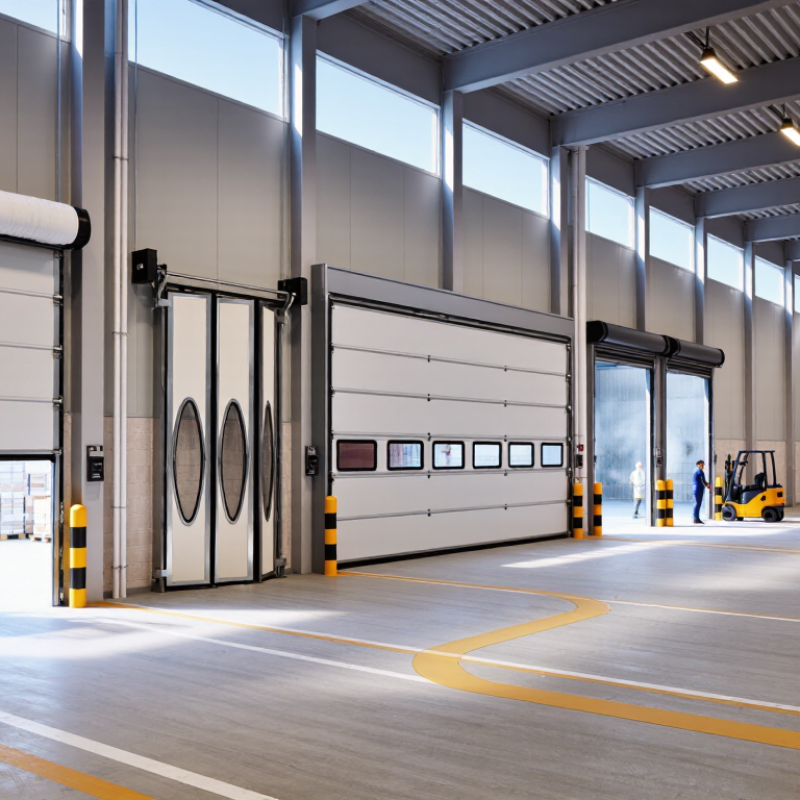
Rapid action doors are powered industrial doors designed for frequent, fast movement. They separate work zones while limiting air exchange, dust, noise, and temperature loss. Most models use a flexible curtain, side guides, a drive motor, and a control panel. When a vehicle, worker, pull cord, or remote signal activates the door, the motor raises the curtain along its guides. Sensors then confirm the opening is clear before closing begins. Some systems also include a safety edge that stops or reverses movement after contact.
These doors support busy warehouses, food-processing areas, loading bays, and controlled production rooms. Their value is not simply speed. A quick opening reduces waiting time, while reliable sealing helps stabilize indoor conditions. From practical site inspections, opening frequency, traffic direction, wind pressure, and cleaning routines affect performance more than advertised speed. It is not simply faster.
Selection should begin with accurate measurements and a clear traffic plan. The door must match the opening size, operating cycle, surrounding temperature, and required hygiene level. Photoelectric sensors need regular cleaning because dust or condensation can cause false signals. Curtains, guides, motors, and emergency release parts also require scheduled checks. No door is perfect. High wind, uneven floors, or poor installation can reduce service life. A careful review after installation often reveals small issues that specifications miss. Safety devices should be tested by qualified personnel and recorded in a maintenance log.
2026 Top Types of Rapid Action Doors for Global Buyers
What Are Rapid Action Doors and How Do They Work?
Rapid action doors are powered doors designed to open and close quickly, helping separate work areas, reduce air exchange, improve traffic flow, and support temperature control. The chart compares representative maximum opening speeds commonly published for major rapid door categories. Actual performance depends on door size, operating conditions, safety requirements, and configuration.
Main Types of Rapid Action Doors for Different Applications
Rapid action doors serve different operational problems, so one design rarely fits every facility. Roll-up doors suit warehouses with narrow aisles and frequent forklift movement. Their compact curtain clears the opening quickly and leaves more ceiling space. Folding doors work better for wider industrial entrances, especially where wind exposure is severe. Sliding doors remain practical for large maintenance bays, although they usually need more side clearance.
Cold-storage rooms need insulated rapid doors with tight seals. The 2024 Global Cold Chain Alliance report highlights continued expansion in temperature-controlled logistics, driven by food and pharmaceutical distribution. In these rooms, every opening can disturb temperature stability. High-speed operation helps, but poor installation can waste the advantage. Cleanrooms require smooth surfaces, limited ledges, and controlled airflow. A 2024 MarketsandMarkets analysis identifies hygiene-sensitive manufacturing as an important application area for advanced industrial doors. Small design details matter here.
Traffic doors fit busy internal routes, where people and carts pass constantly. Their flexible panels can reduce minor collision damage, but they are not suitable for every pressure or hygiene condition. The U.S. Department of Energy reports that uncontrolled air leakage can increase building energy use, making door speed and sealing relevant to operating costs. Still, energy savings are not automatic. Site traffic, cleaning routines, opening frequency, and local climate should guide selection. A door that looks efficient on paper may perform poorly in a badly planned doorway.
How to Select the Right Rapid Action Door for Global Use
2026 Top Types of Rapid Action Doors for Global Buyers
How to Select the Right Rapid Action Door for Global Use
Selecting a rapid action door starts with the working environment, not the advertised speed. Measure the opening, traffic frequency, pressure differences, and available headroom. A food facility may need smooth, washable surfaces and controlled air movement. A warehouse may prioritize impact recovery, wind resistance, and forklift visibility. Cold storage requires suitable insulation and seals. Faster is not always better.
Check the door’s cycle rating, curtain material, motor protection, safety sensors, and emergency release system. Electrical requirements must match the destination site. Confirm voltage, frequency, control-panel language, spare-part availability, and installation support before ordering. Reliable technical documents matter. So does after-sales training. A low purchase price can become expensive when maintenance procedures are unclear.
Tips: Ask for tested performance data, not general claims. Request drawings showing clearances and fixing points. Compare cleaning needs, noise levels, and expected service intervals. Consult local engineers about building conditions and applicable safety requirements. In my assessment, buyers often focus on speed and overlook wind loads or drainage. That mistake is understandable, but costly. No selection method is perfect. Leave room for site changes, because real facilities rarely match the first drawing.
Safety Standards, Maintenance, and Market Trends in 2026
2026 Top Types of Rapid Action Doors for Global Buyers
Safety Standards, Maintenance, and Market Trends in 2026
Rapid action doors now serve warehouses, food facilities, logistics centers, and controlled production areas. Global buyers should verify local safety requirements before selecting a door. Common checks include photoelectric sensors, pressure-sensitive edges, emergency release systems, and visible warning signals. The door should stop or reverse when a person, vehicle, or package enters its path. Risk assessments must reflect real traffic, not only factory test conditions. A clean installation matters too.
Maintenance records are equally important. Operators should inspect curtains, guides, motors, seals, and sensors at scheduled intervals. Dust can weaken sensor performance. Small alignment problems may become expensive failures. Cleaning routines should match the working environment, especially where hygiene controls are strict. Trained technicians need documented checks and replacement procedures. No checklist is perfect. Sites change, and maintenance plans should change with them.
In 2026, buyers are showing stronger interest in energy-saving doors, high-cycle systems, and remote condition monitoring. Data can reveal unusual opening times or motor strain before downtime occurs. However, connected equipment also requires access controls and reliable network practices. Buyers should ask about spare-part availability, service response, operating temperatures, and training. A lower purchase price may hide higher maintenance costs. Market growth is real, but product claims still need independent verification and practical site testing.
 Skip to content