China Top Lightweight Golf Umbrellas for Global Buyers
China Top lightweight golf umbrellas for Global Buyers begins with a practical question: what makes an umbrella reliable on the course? Weight matters, but it is not everything. A fragile frame can ruin an otherwise attractive product. Strong wind exposes weak ribs, loose joints, and poor handle construction. Buyers should examine canopy size, shaft material, opening mechanism, UV protection, and water-repellent performance.
Ethan Wu, a golf-accessory sourcing consultant with experience in Chinese manufacturing, says, “A lightweight golf umbrella should disappear in the golfer’s hand, not disappear in quality.” His observation is useful for importers. A good model may use fiberglass ribs, a reinforced shaft, and a balanced grip. These details reduce fatigue during long rounds. They also support more dependable performance in sudden rain.
China offers broad manufacturing capacity, flexible customization, and competitive production options. However, global buyers should not judge suppliers by photographs alone. Factory audits, sample testing, packaging checks, and consistent batch inspections remain important. Ask for measurable specifications. Request opening-cycle tests and wind-resistance data. Claims need evidence.
The process is not perfect. Even a well-tested umbrella can fail under unusual weather. That limitation deserves honest attention. Buyers may also overemphasize low weight and overlook durability. A lighter product is not automatically better. The most dependable lightweight golf umbrellas balance portability, coverage, structural strength, appearance, and price. This guide explores those factors for distributors, retailers, golf brands, and procurement teams seeking reliable Chinese suppliers.
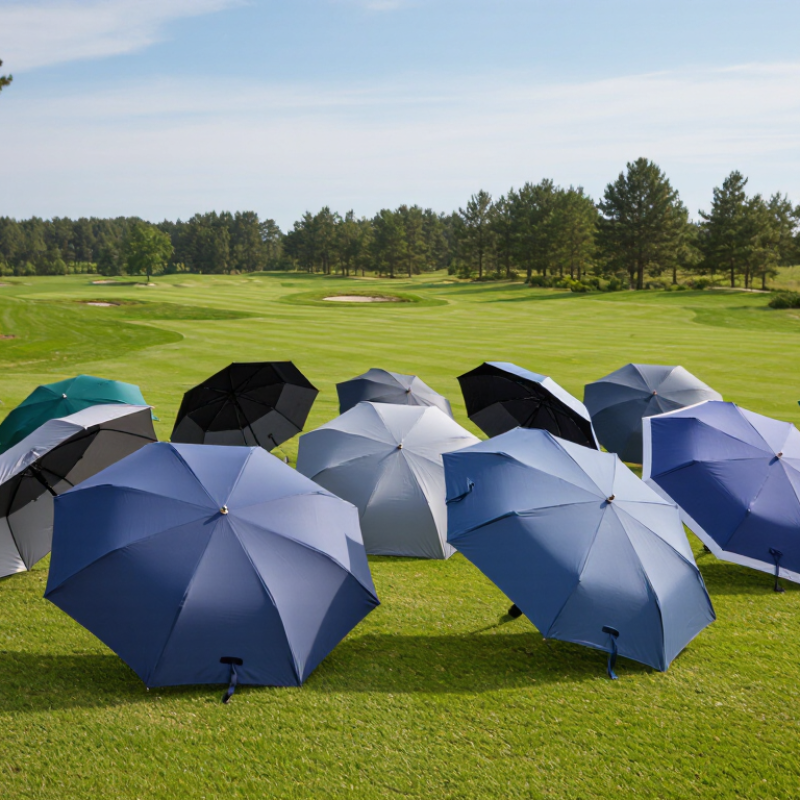
Types of Lightweight Golf Umbrellas for Global Buyers
China Top Lightweight Golf Umbrellas for Global Buyers
Types of Lightweight Golf Umbrellas for Global Buyers
Lightweight golf umbrellas are not one standard product. Buyers usually choose between manual, automatic, double-canopy, and compact folding types. Each design serves a different course condition.
Manual umbrellas are often lighter and easier to repair. They suit golfers who prefer simple opening mechanisms and lower shipping weight. Automatic models open quickly, which helps during sudden rain. However, the spring system may add weight and require careful quality checks.
Double-canopy umbrellas use layered panels to release wind pressure. They can feel more stable beside open fairways, especially during strong gusts. This design is useful, but it is not completely windproof. That wording matters for accurate product claims.
Some models include fiberglass ribs, waterproof polyester fabric, and ergonomic rubber handles. These details affect grip, durability, and comfort after several holes.
Compact folding golf umbrellas fit easily inside travel bags. They are practical for buyers serving golfers who value portability. Yet, smaller frames may provide less coverage than full-length models. I have found that measurements can feel misleading without comparing the open canopy diameter. Ask suppliers for both closed length and usable coverage.
For international purchasing, inspect rib alignment, fabric coating, shaft strength, and automatic opening tests. A sample should be checked after repeated opening and closing. Packaging also deserves attention. A sharp rib or loose handle can damage nearby products during transport. Lightweight should not mean fragile. That distinction still causes avoidable purchasing mistakes.
Key Materials and Construction Features
China Top Lightweight Golf Umbrellas for Global Buyers
Key Materials and Construction Features
A reliable lightweight golf umbrella begins with balanced materials, not the lowest possible weight. Fiberglass ribs resist bending during sudden gusts and remain less prone to rust than steel. Aluminum shafts reduce mass, but thinner tubing can feel unstable when fully extended. For regular golf use, a practical umbrella often weighs between 180 and 300 grams.
The canopy fabric deserves close inspection. High-density pongee polyester offers a smooth surface, strong color retention, and quick drying after rain. A water-repellent coating helps droplets roll away, but coatings may weaken after repeated folding and washing. A double-canopy design can release trapped wind through small vents. It improves stability, although it may add weight and production cost.
Construction details often separate a dependable umbrella from a fragile one. Look for reinforced rib joints, neat stitching, and a shaft that opens without grinding sounds. The handle should provide a secure grip when wet. Automatic opening is convenient, but its spring mechanism needs careful quality control.
I would not trust weight claims alone. Sample testing in rain and moderate wind reveals more than a specification sheet. Check the closed length, canopy diameter, carton protection, and replacement-part availability before placing a large international order.
Small defects matter. A loose rivet can become a failed umbrella within one season.
Essential Performance Standards and Weather Protection
China Top Lightweight Golf Umbrellas for Global Buyers
A lightweight golf umbrella must protect more than a golfer’s shoulders. It should manage heavy rain, gusts, ultraviolet exposure, and repeated opening cycles. The World Meteorological Organization reported that 2024 was the warmest year on record, increasing the need for dependable outdoor protection. Buyers should request measurable test results, not vague claims about “all-weather” performance.
ISO 5912:2023 specifies safety and performance requirements for umbrellas. Useful checks include canopy stability, runner operation, frame strength, and sharp-edge control. A 130-centimeter canopy can shelter two users, but its size increases wind resistance. Fiberglass ribs often reduce electrical and corrosion concerns, while a vented canopy can release trapped air. However, vents may allow angled rain to enter. That trade-off deserves field testing.
For water resistance, suppliers should identify fabric construction and testing conditions. ISO 811 measures resistance to water penetration in textile materials, although umbrella fabric needs practical rain testing too. I would test samples under continuous spray, then open and close them at least 500 times. The handle should remain secure when wet. Small details matter.
A useful procurement target is about 0.6 to 0.9 kilograms, depending on canopy diameter and frame design. Lighter is not always better. Extremely thin shafts can flex noticeably during sudden gusts. Independent inspection reports, batch records, and clear repair-part availability improve reliability. Some specifications still look impressive on paper, yet fail beside a windy golf course.
Size, Weight, and Portability Selection Guide
Choosing a lightweight golf umbrella starts with usable coverage, not the largest canopy. The National Golf Foundation reported 28.1 million U.S. on-course golfers in 2023. That participation level supports demand for practical rain protection. For most adult golfers, a 62–68 inch arc covers the shoulders and bag area. A larger canopy may improve coverage. It also catches more wind and occupies more storage space.
Weight changes the carrying experience quickly. A target below 500 grams feels manageable during a full 18-hole round. However, buyers should check the total packed weight, including the sleeve and strap. A compact closed length of 25–30 inches usually fits golf bags and standard shipping cartons. Telescopic designs save space, but extra joints can increase failure points. This is where specifications need honest testing. Lightweight does not automatically mean durable.
The World Meteorological Organization’s State of the Global Climate 2023 confirmed record global temperatures and widespread weather extremes. Sudden showers remain a realistic equipment concern. For export purchasing, request canopy diameter, closed length, gross weight, shaft material, and wind-test conditions. Ask for measurements from production samples. One sample can mislead. A practical selection might use a 65-inch canopy, 420-gram net weight, and a 28-inch closed length. That combination balances coverage and portability, though buyers should reconsider it for strong coastal winds or oversized golf bags.
China Top Lightweight Golf Umbrellas for Global Buyers - Size, Weight, and Portability Selection Guide
Typical OEM specification profiles for lightweight golf umbrellas. Actual measurements may vary slightly according to materials, construction, and inspection methods. | Profile | Recommended Use | Canopy Diameter | Closed Length | Approx. Weight | Canopy Material | Frame Construction | Opening Type | Portability Rating | Key Selection Consideration |
| Compact Golf Profile | Travel, commuting, and occasional golf use | 120 cm | 38 cm | 430–500 g | 190T polyester | Fiberglass ribs with aluminum shaft | Manual open | Excellent | Best for buyers prioritizing luggage space and low carrying weight over maximum coverage. |
| Standard Lightweight Golf Profile | General golf, walking, and outdoor events | 130 cm | 96 cm | 520–620 g | 190T polyester with water-repellent coating | Fiberglass ribs with steel or aluminum shaft | Manual open | Very Good | A balanced option offering useful coverage while remaining manageable for extended walking. |
| Wind-Resistant Lightweight Profile | Open-course golf and exposed outdoor areas | 135 cm | 98 cm | 600–700 g | 190T or 210T polyester | Double-layer fiberglass ribs and reinforced joints | Manual open | Good | Choose this structure when frame flexibility and durability are more important than minimum weight. |
| Extra-Coverage Golf Profile | Two-person coverage and golf cart use | 145 cm | 100 cm | 680–800 g | 210T polyester | Full fiberglass frame with reinforced spreaders | Manual open | Moderate | Provides broader protection for two users but requires more storage space and carrying effort. |
| Automatic Compact Profile | Promotional programs and urban outdoor use | 125 cm | 40 cm | 560–680 g | 190T polyester | Fiberglass ribs with steel or aluminum shaft | Automatic open | Very Good | Convenient one-button operation, although the opening mechanism generally adds weight. |
| Premium Ultralight Profile | Frequent travelers and weight-sensitive buyers | 118–122 cm | 35–39 cm | 350–430 g | Ripstop polyester or lightweight pongee | Carbon-fiber or high-strength fiberglass components | Manual open | Excellent | Lowest weight and smallest packed size, with higher material and component costs. |
Selection reference: canopy diameter is measured across the open arc from one edge to the opposite edge; closed length is measured from the handle end to the canopy tip. For global purchasing, confirm packed dimensions, carton quantity, gross weight, fabric coating, wind-testing method, and sampling tolerance before placing an order.
Global Purchasing, Customization, and Quality Considerations
For global buyers, a lightweight golf umbrella should balance portability, coverage, and dependable performance. A practical target is 450–700 grams, with a wide canopy and a shaft that feels stable in wet weather. Smaller weight is attractive, but it can reduce frame strength. That trade-off deserves honest testing. Small details matter.
During purchasing, request a physical sample before discussing bulk orders. Check opening force, canopy tension, handle comfort, and sleeve stitching. Ask the supplier for material specifications, inspection records, production capacity, and realistic lead times. Confirm carton dimensions and packing protection, because bent ribs often result from transport rather than manufacturing. Clear purchase terms reduce avoidable disputes.
Customization can include canopy colors, printed artwork, handles, straps, and packaging. Artwork should be checked at actual size, not only on a screen. A pre-production sample helps reveal color shifts and logo distortion. Quality control should examine waterproofing, rib alignment, shaft movement, corrosion resistance, and repeated opening cycles. In my sourcing experience, a sample may perform well while bulk production shows uneven stitching. This is why random inspections and traceable batch records matter. Buyers should also verify labeling, packaging, and documentation requirements for each destination market. No supplier should promise identical performance without defining the test method.
China Top Lightweight Golf Umbrellas for Global Buyers
Global purchasing, customization, and quality considerations
This procurement framework prioritizes durability, canopy coverage, and wind performance while also accounting for portability, customization, and export readiness. The percentages represent recommended decision weights for supplier evaluation, not market-share data.
 Skip to content