Serving Minnesota & Iowa for over 25 years
Choosing Pvc Cabinets is not just a color decision. It means weighing moisture resistance, construction quality, storage, and long-term care. Houzz’s 2024 U.S. Kitchen Trends Study tracks homeowner renovation choices and spending, while the National Kitchen & Bath Association’s 2024 Kitchen Trends Report surveys design professionals. These reports offer useful context, but neither is a product test proving that every PVC cabinet performs equally well.
Start with the room itself. A cabinet beside a busy sink faces splashes, damp towels, and frequent cleaning; one near a stove may encounter heat and grease. Ask what the cabinet’s doors, panels, and core are made from, and how edges are sealed. Check hinge movement, shelf support, and the finish under bright light. Small details matter. A glossy sample can look flawless in a showroom yet reveal fingerprints or uneven edges at home.
Compare specifications, not just prices. Request written care instructions, warranty terms, and details about hardware and panel thickness. Confirm that the product suits your installation conditions, especially in humid rooms. PVC is not a magic shield, and vague claims deserve follow-up questions. Industry trend reports can help explain what homeowners value, but they cannot replace product-specific evidence. The best choice is the one that fits your room, budget, and everyday habits—and still makes sense after the showroom shine wears off.
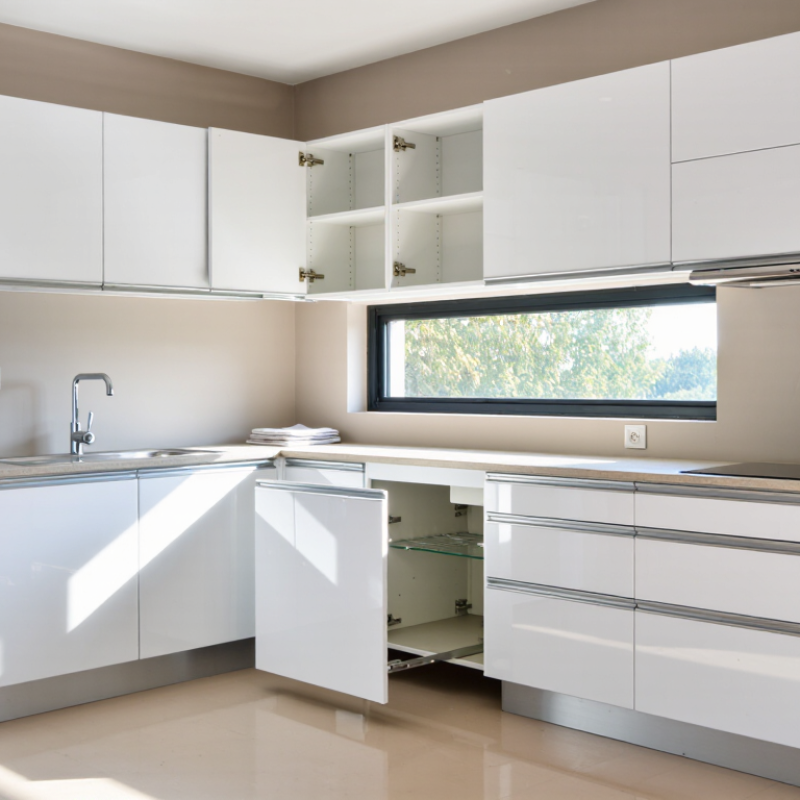
PVC cabinets are not all made from the same material. Some use solid PVC foam board, while others have a wood-based core covered with PVC film. Ask what the doors, cabinet sides, and shelves are made of; a matching finish can hide different construction. That distinction matters.
PVC foam board resists everyday moisture, but it is not automatically waterproof. Check whether edges and joints are sealed, especially beneath the sink, where drips can linger. Press gently near a hinge or shelf support. If the panel flexes noticeably, ask how the hardware is reinforced. Thin or low-density boards may hold screws less securely over time. Construction varies.
Look closely at corners and cutouts. Uneven film, lifted edges, or visible gaps can point to poor finishing. Ask for a sample and inspect it under bright light; gloss can disguise small surface flaws. Also check the manufacturer’s care and temperature guidance. PVC can soften or discolor with prolonged heat, so placing a cabinet beside an oven may need extra planning. I would not judge quality by thickness alone. A heavier panel can still have weak joints, and an attractive sample says little about how the cabinet was assembled.
Assess what you actually store before choosing PVC cabinets. For one week, note bulky cookware, cleaning supplies, pantry goods, and items that end up on counters. Measure the wall, ceiling height, door swing, and walking clearance; a cabinet that fits on paper can still block a drawer or narrow a busy walkway. Check plumbing, outlets, and damp corners, too. PVC resists moisture, but shelf support and hardware still matter.
Storage needs vary by household. The National Association of Home Builders’ 2021 What Home Buyers Really Want report found that 83% of buyers rated a walk-in pantry essential or desirable. That figure is a useful signal, not a rule for every home. In a compact kitchen, deep cabinets with pull-out shelves may make more sense than a separate pantry. In a bathroom, measure around the toilet and vanity before adding tall storage. Small details count.
Measure twice. Then sketch.
Group items by how often you use them: daily dishes near the dishwasher, rarely used serving bowls higher up, and household cleaners away from food. A simple inventory can expose wasted space, though it may not capture seasonal changes. I would leave some shelf room unused; tightly packed cabinets look efficient until one large pot refuses to fit. Check each cabinet’s stated load capacity, shelf spacing, and cleaning requirements before comparing PVC options.
PVC cabinets can look similar in a showroom, yet their construction may differ. Ask whether doors and cabinet boxes use solid PVC board or PVC-faced panels. Check panel thickness, surface consistency, and edge sealing. Inspect corners closely. Poorly sealed edges can let moisture reach the core, especially near sinks. PVC resists moisture, but heat and prolonged dampness can still cause problems.
Durability depends on more than the surface. Press gently on a door and shelf; excessive flex may signal a panel that needs extra support. Check the maker’s load guidance, and look for sagging or uneven gaps in display units. I still find edge details easy to overlook. A neat front can hide a weak joint. Ask how the cabinet should be cleaned, too, since abrasive pads may scratch some finishes.
Hardware affects daily use. Open and close each door several times. Hinges should move smoothly, hold alignment, and feel secure at their fixing points. Drawer runners should travel evenly when loaded, without scraping or wobbling. Soft-close parts are useful, but they are not a substitute for sturdy mounting. In humid rooms, ask about corrosion-resistant hardware and replacement availability. Small defects matter: a loose screw today can become a crooked door later.
Choosing PVC cabinets room by room starts with how each space is used. In a kitchen, flat-front doors create a simple look and are easier to wipe around handles. Check the cabinet maker’s care and heat guidance before placing units near cooking areas. A pale, matte finish can soften a small kitchen, while a darker gloss may show fingerprints more clearly. That detail is easy to miss.
Bathrooms need finishes that suit regular splashes and changing humidity. Still, do not assume every PVC cabinet handles moisture in the same way; check the product specifications and protect exposed edges. In bedrooms or laundry rooms, wood-look finishes can add warmth without competing with other surfaces. Bring a sample home. Light changes everything.
Set the budget around the whole installation, not just the doors. Include hinges, handles, delivery, fitting, and any adjustments needed for uneven walls. Compare cabinet thickness and hardware, too; a low price may not tell you how the unit will feel after daily use. I find finish choices oddly difficult once several samples sit together. Pick two or three, view them in morning and evening light, then measure each room carefully before ordering.
Before choosing PVC cabinets, inspect the room and measure more than once. Check whether the floor is level and the walls are plumb; even a small gap can make doors look uneven. Mark pipes, outlets, and appliance clearances on the wall before ordering. Measure twice. If the cabinets will hold heavy dishes, ask how they should be fixed to your wall type. Drywall, masonry, and older walls may need different fasteners. Follow the cabinet maker’s installation instructions, and do not assume every PVC panel can support the same load.
Moisture resistance does not mean maintenance-free. PVC surfaces usually clean easily with a soft cloth and mild soap, but abrasive pads and strong solvents may dull or damage the finish. Dry water around seams and sink edges instead of letting it sit. A detail that is easy to overlook is heat exposure: check the recommended distance from ovens and cooktops, and note whether strong window sunlight falls on the doors. Materials and panel construction vary, so check care guidance for the exact cabinet type.
Every few months, look for loose hinges, rubbing doors, or swelling around cut edges. Tighten fittings gently; overtightening can damage the material. Keep a small record of adjustments. It may feel fussy, but it can help you spot gradual movement before a door starts catching.