Serving Minnesota & Iowa for over 25 years
Choosing the best reinforcing steel bars is not simply a matter of comparing prices. It requires practical judgment, technical knowledge, and reliable supplier verification. A bar may look flawless under warehouse lighting, yet its actual performance depends on chemical composition, tensile strength, rib pattern, and production consistency.
Start with the project requirements. Confirm the required grade, bar diameter, length, bending shape, and applicable standards. ASTM, BS, EN, and other specifications may use different testing methods. Do not assume that one certificate proves everything. Request mill test certificates, heat numbers, inspection records, and recent laboratory results. Check whether the documents match the bundles delivered to your site. That small detail prevents expensive confusion.
Site conditions matter too. Coastal projects may need stronger corrosion protection. Large foundations demand dependable ductility and accurate dimensions. In practice, storage can also affect quality. Bars left on wet ground may develop heavy rust, mud, or identification problems. Use raised supports and inspect them before installation.
A trustworthy manufacturer should explain its steelmaking process clearly. It should welcome independent inspection instead of avoiding difficult questions. Factory experience helps, but it does not replace evidence. Ask about production capacity, traceability, loading procedures, and after-sales support. Then compare total value, not only the quoted ton price.
No selection checklist is perfect. Human mistakes still happen. I have seen purchasing teams focus on delivery speed and overlook bar markings. A careful buyer reviews samples, verifies standards, and confirms every detail in writing. The best choice combines tested performance, consistent supply, clear communication, and suitability for the actual structure. Reliability is built before the bars reach the construction site.
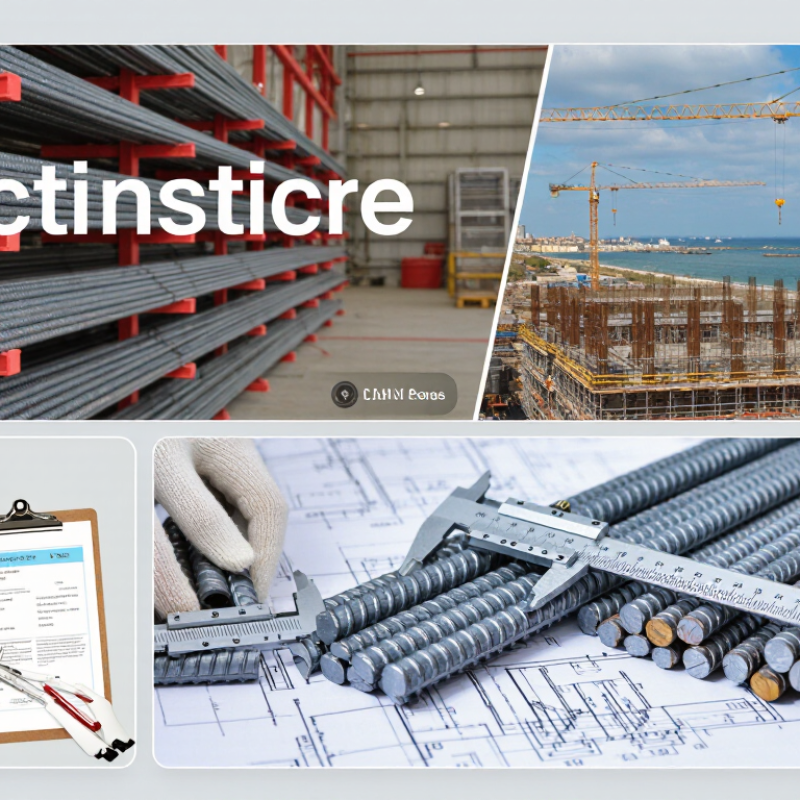
China reinforcing steel bars should be defined by type, grade, standard, and verified test results. Plain round bars suit light ties and secondary applications. Deformed bars provide stronger concrete bonding through their ribs. Hot-rolled bars remain the common choice for reinforced concrete frames, foundations, and bridges.
Grade names are not interchangeable. Under GB/T 1499.2-2018, HRB400 and HRB500 indicate nominal yield strengths of 400 and 500 MPa. The “E” designation adds requirements for seismic performance. ASTM A615 Grade 60 requires a minimum yield strength of 420 MPa, while BS 4449 B500B specifies 500 MPa. These values should never be treated as automatic equivalents. Check the project specification.
Numbers matter. The World Steel Association reported China produced about 1,019 million tonnes of crude steel in 2023, from a global total of about 1,892 million tonnes. Large output does not guarantee consistent rebar quality. Ask for heat numbers, mill test certificates, chemical analysis, tensile results, bend tests, and dimensional inspection. ISO 15630-1 provides recognized testing methods for reinforcing steel. A third-party laboratory can verify disputed results.
Small details often decide performance. Confirm nominal diameter, rib geometry, bar length, bundle weight, and rust condition before shipment. A cheaper offer may hide higher cutting loss or uncertain traceability. I would also review sampling frequency; one passing sample cannot represent every heat. Recheck the paperwork. Procurement mistakes are usually quiet, expensive, and difficult to repair after concrete placement.
Choosing the best China reinforcing steel bars starts with verifiable quality, not price. Confirm the required grade, diameter, yield strength, tensile strength, elongation, and rib pattern. For Chinese projects, GB/T 1499.2 is a key reference for hot-rolled reinforcing bars. Export projects may require ISO 6935-2, ASTM A615, or another specified standard. Never assume these standards are interchangeable.
Request a mill test certificate for every production batch. It should show heat numbers, chemical composition, mechanical results, dimensions, and inspection dates. Match those details with bar markings and shipping records. Independent laboratory testing can verify tensile strength, bending performance, carbon content, and dimensional tolerance. Certification must come from a competent, traceable body. A certificate alone is not proof. Sampling plans also matter.
Tips: Check markings before unloading. Photograph labels, bundles, and heat numbers. Test a sensible sample from different bundles, not only the easiest one. Review whether the laboratory follows recognized testing methods. Ask how nonconforming bars are isolated and replaced. Keep records from purchase to site delivery. This step is often overlooked. One weakness in many inspections is excessive trust in paperwork; physical checks can expose mixed batches, rust damage, or incorrect diameters. Requirements should be confirmed with the project engineer and local regulations before ordering.
A reliable comparison starts with the manufacturer, not the lowest quotation. Check how long the mill has produced reinforcing bars and whether its equipment is regularly maintained. Ask for factory audit records, export experience, and recent customer references. A professional supplier should explain its billet source, rolling process, and production capacity clearly. Vague answers deserve caution.
Capacity affects both price and delivery reliability. Review monthly output, furnace size, rolling line speed, storage space, and maintenance schedules. A factory may advertise high capacity but lack enough finished stock during peak construction seasons. Request production records for comparable bar sizes and grades. Delivery evidence matters. Small details matter.
Quality control must follow the required national or project standard. Examine mill certificates, heat numbers, chemical analysis, tensile strength, yield strength, elongation, and bend-test results. Independent laboratory testing can verify the supplier’s documents. Traceability should connect each bundle to a specific heat and production date. That is essential.
A practical mistake is comparing only test values. I once overlooked inconsistent bundle marking during a document review. The numbers looked excellent, but identification was weak. This taught me to inspect labels, weighing procedures, sampling methods, and corrective-action reports. Ask whether the supplier investigates failed tests openly. Reliable producers do not hide occasional problems; they record them and improve the process.
Choosing reinforcing steel bars from China requires more than comparing the quoted price. The World Steel Association’s 2024 World Steel in Figures reports that China produced about 1.005 billion tonnes of crude steel in 2023. This scale can support competitive offers, but specifications still control value. Compare the mill price with freight, insurance, port charges, inspection, and inland delivery. Cheap is not cheap. Confirm diameter tolerance, steel grade, heat numbers, test certificates, and quotation validity. Currency changes and scrap costs can quickly affect the final landed price.
Lead time should include production, testing, packing, vessel booking, customs clearance, and discharge. Ask for a written schedule with realistic buffer days. UNCTAD’s Review of Maritime Transport 2024 reports that global maritime trade grew 2.4% in 2023, while route disruptions increased pressure on shipping capacity. Therefore, a promised sailing date is not a guaranteed arrival date. Packaging deserves equal attention. Use bundled bars with strong steel straps, moisture-resistant tags, and visible bundle marks. Protect documents inside waterproof sleeves. Small details matter.
Export logistics often fail at handover points. Request photos before loading, container or vessel information, weight records, and a packing list matching each bundle. Check whether the port accepts the planned cargo length and weight. My own purchasing checklist would still leave room for revision; weather, congestion, and inspection delays are difficult to predict. Records matter. A supplier that explains risks clearly is usually more reliable than one offering the shortest lead time.
Evaluate indicative FOB pricing, production lead times, packaging requirements, and export logistics before selecting a reinforcing steel bar supplier.
The chart uses practical planning benchmarks for standard deformed reinforcing steel bar export orders from China. Larger orders may receive lower unit pricing and shorter production lead times, while final costs depend on steel grade, diameter mix, inspection requirements, Incoterms, port congestion, and destination route.
Packaging should normally include seaworthy bundles, corrosion protection where required, clear heat-number marking, and weight documentation. Always confirm current mill quotations, freight rates, export documents, and delivery schedules before placing an order.
How to Choose the Best China Reinforcing Steel Bars?
Select a Reliable Supplier Through Samples, Inspection, and Contracts
Construction consumes about half of global steel demand, according to the World Steel Association’s 2024 World Steel in Figures. That scale makes supplier selection critical, not cosmetic. Request samples from the exact production mill, not a showroom batch. Check bar diameter, rib pattern, surface rust, straightness, and mass per metre. Record the heat number and keep sealed samples for comparison.
Ask for recent mill test certificates covering yield strength, tensile strength, elongation, chemical composition, and bend performance. For China projects, compare results with GB/T 1499.2; international projects may require ASTM A615/A615M or equivalent specifications. Testing should come from an ISO/IEC 17025-accredited laboratory when disputes could affect payment. The World Steel Association reported approximately 1.88 billion tonnes of crude steel production in 2023, but volume does not prove consistency. Large capacity can still hide weak batch control.
Inspection clauses need measurable acceptance limits. Include pre-shipment inspection, random sampling by heat, dimensional checks, and release approval. Contracts should state grade, diameter tolerance, bundle marking, certificates, packing, delivery terms, and remedies for failed tests. Define who pays for retesting. Be precise about replacing nonconforming bars. One overlooked detail is often bundle labeling. A missing heat number can make good test results difficult to trust. Do not rely on attractive samples alone; I would also review at least three recent inspection records, although this still cannot guarantee every future shipment.
Use this practical evaluation table to compare reinforcing steel bar suppliers in China. Confirm the applicable project standard, grade, dimensions, testing frequency, and contractual requirements before placing an order.
| Evaluation Dimension | Recommended Acceptance Criteria | Sample or Inspection Evidence | Suggested Weight | Priority |
|---|---|---|---|---|
| Applicable Product Standard | The supplier must clearly identify the governing standard, such as GB/T 1499.2, ASTM A615/A615M, BS 4449, EN 10080, or ISO 6935-2, as specified by the project. | Standard reference shown on the quotation, mill certificate, inspection plan, and contract. | 10% | Critical |
| Steel Grade and Mechanical Properties | Yield strength, tensile strength, elongation, and tensile-to-yield ratio must meet the selected grade and project specification. Do not accept a grade based only on nominal strength. | Independent tensile test report and heat-specific mill test certificate. | 15% | Critical |
| Chemical Composition | Carbon, manganese, silicon, sulfur, phosphorus, and carbon equivalent must comply with the selected standard and welding requirements. | Heat analysis, product analysis where required, and carbon-equivalent calculation for weldable applications. | 12% | Critical |
| Bar Diameter and Dimensional Tolerance | Nominal diameters, measured diameter, mass per metre, length, and permitted tolerances must match the purchase order and applicable standard. | Caliper measurements, weighing records, length checks, and dimensional inspection report. | 12% | Critical |
| Rib Pattern and Bond Characteristics | Rib geometry, rib height, spacing, and surface condition should comply with the specified standard and provide reliable concrete anchorage. | Visual comparison against approved samples, rib measurement, and certificate or test data for bond-related requirements. | 8% | High |
| Bend and Rebend Performance | Bars must pass the required bend and, where specified, rebend tests without cracking or unacceptable surface defects. | Laboratory test results using the bend diameter and test procedure required by the selected standard. | 10% | Critical |
| Sample Approval Before Mass Production | A representative sample should be approved before mass production, especially when the order includes a new grade, diameter range, rib pattern, or processing requirement. | Signed sample approval record, photographs, retained sample, and documented deviations. | 8% | High |
| Third-Party Pre-Shipment Inspection | Inspection should take place after production is substantially complete and before shipment, covering quantity, dimensions, marking, packaging, documents, and tests. | Inspection report issued by an agreed independent inspection body or qualified laboratory. | 10% | Critical |
| Heat Number and Traceability | Every bundle should be traceable to its heat number, production date, grade, diameter, quantity, and relevant test records. | Bundle tags, heat numbers, packing list, mill certificates, and matching inspection records. | 8% | Critical |
| Surface Condition | Bars should be free from harmful cracks, seams, laminations, excessive pitting, oil, paint, and loose scale that could impair performance or concrete bond. | Visual inspection, photographs, surface defect record, and corrective-action procedure. | 6% | High |
| Packaging, Marking, and Loading | Bundles should be securely tied, protected from avoidable transport damage, and marked with size, grade, heat number, bundle number, net weight, and origin information. | Packing photographs, loading supervision report, bundle list, and shipping document cross-check. | 5% | Medium |
| Contract Quality Clauses | The contract should define standards, grades, sizes, quantity tolerance, inspection rights, required documents, nonconformance remedies, replacement obligations, and payment conditions. | Approved technical specification, purchase contract, inspection and acceptance clause, and signed deviation list. | 10% | Critical |
| Delivery Reliability | The supplier should provide a realistic production schedule, booking plan, estimated shipping date, and notification procedure for delays or changes. | Production schedule, order progress updates, shipping records, and agreed delay-notification process. | 4% | Medium |
| Documentation Completeness | Required documents should be complete, consistent, and available before final payment or shipment release where contractually required. | Mill certificate, chemical and mechanical test results, inspection report, packing list, invoice, and certificate of origin if required. | 5% | High |
| Total Suggested Evaluation Weight | 123% | Rebalance to 100% | ||