Serving Minnesota & Iowa for over 25 years
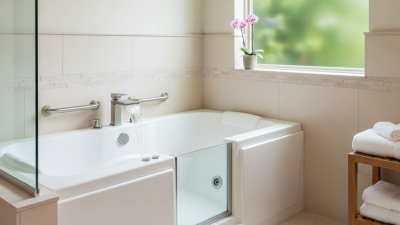
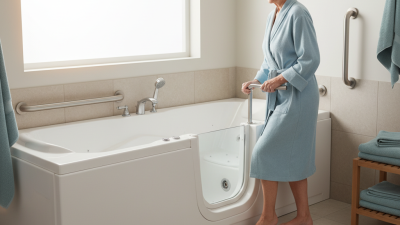
A step in tub can make bathing easier for people with limited mobility, stiff joints, or reduced balance. However, safe use depends on more than the door and low entry. The bathroom floor, transfer technique, water temperature, seating, and emergency access all matter. A beautiful installation can still be unsafe.
Mary Jo Peterson, an occupational therapist and certified aging-in-place specialist, offers a useful principle: “Good design supports independence while respecting human limitations.” Her point applies directly to every step in tub. Users should enter slowly, hold a secure grab bar, and keep both feet stable before turning. Do not rely on a towel rail, shower curtain, or movable chair. They can shift without warning.
Keep the threshold dry. Use a textured, non-slip surface. Place soap and shampoo within reach, not across the tub. A handheld shower can reduce twisting and stretching. The seat should feel firm, not loose. Test the water before sitting down, especially when reduced sensation affects the hands or feet.
No setup is perfect.
Caregivers should observe the first few uses, even when the user feels confident. Confidence helps, but it can also hide small mistakes. I have seen how rushing, wet slippers, or a forgotten bath mat can change a calm routine quickly. Review the manufacturer’s instructions and arrange professional installation when possible. If pain, dizziness, or weakness appears, stop and seek qualified medical advice. Safe bathing is not about speed. It is about controlled movement, clear space, and honest attention to changing needs.
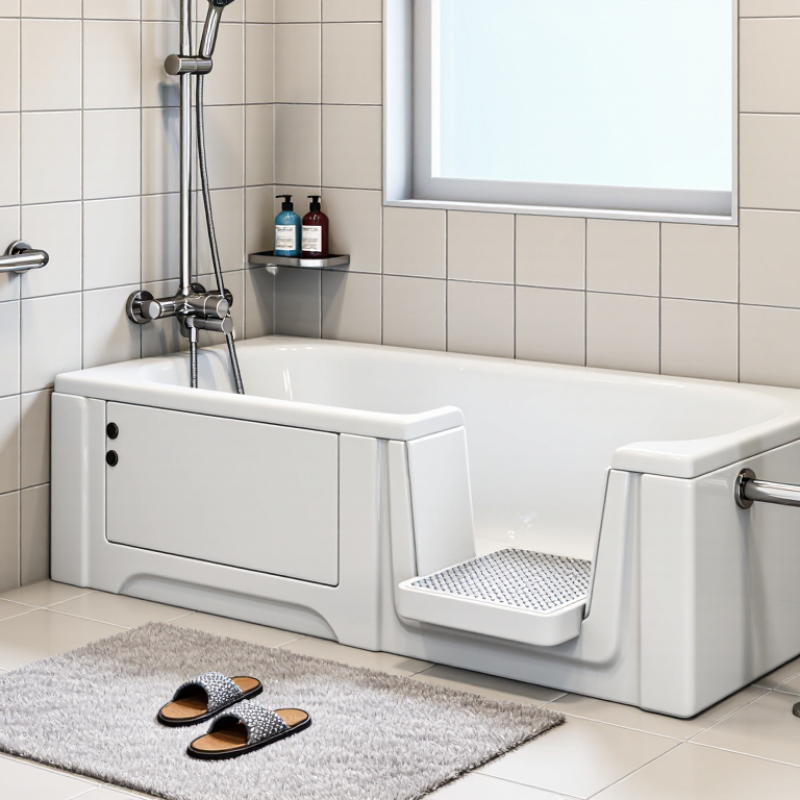
Choosing the right tub step starts with your bathroom, not the product label. Measure the tub’s outer height, inner width, and available floor space. A suitable step should sit level on a dry, firm surface. Look for a broad, textured platform, strong hand support, and a clearly stated weight capacity. Rubber feet should remain stable when water reaches the floor. Small details matter.
Your mobility needs should guide the design. If you have weak knees, poor balance, or limited hip movement, choose a lower step with secure rails. A transfer bench may be safer than stepping over the tub wall. The Centers for Disease Control and Prevention reports that more than one in four adults aged 65 and older falls each year. Its STEADI initiative recommends assessing balance, medications, footwear, and home hazards. A tub step cannot correct every risk.
Test the step beside the tub before bathing. Place both feet fully on the platform, hold the rail, and move slowly. Keep the floor dry. Never twist while climbing. A family member or occupational therapist can observe your movement and suggest adjustments. The National Institute on Aging also recommends grab bars, better lighting, and nonslip bathroom surfaces. I would not rely on suction alone; it may look secure but fail on uneven surfaces. Stop using the step if it shifts, cracks, or feels too narrow. Safety is personal. Recheck it after illness, surgery, or a change in balance.
Before using a tub step, inspect the entire area, not only the step. The floor should be dry, level, and free from loose bathmats, bottles, and clothing. A wet towel can become a hidden trip hazard. Improve lighting around the tub, especially near the floor. Check that the step has intact, non-slip feet and a firm, dry surface. Place it close to the tub edge, where you can step onto it without twisting. Do not use it if it rocks, shifts, or has visible damage.
The Centers for Disease Control and Prevention reports that more than one in four older adults falls each year. It also states that falls cause over 800,000 hospitalizations annually among older adults. These figures make preparation important, even for a short bath. Fill the tub only after checking your footing. Keep water temperature comfortable, and place towels within easy reach. A grab bar may offer better support than a step alone. Do not rely on the step to replace stable hand support. That assumption deserves scrutiny.
Tips: Test the step with one foot before transferring weight. Keep both hands available. Avoid stepping over a high tub wall when tired, dizzy, or rushed. Ask another adult to check the setup if balance is uncertain. No setup is perfect. Recheck the floor after splashing, because safe-looking surfaces can change quickly.
A bath step should sit on a flat, dry section of the tub floor. Keep it away from the drain, curved edges, and slippery soap residue. Before stepping on it, press down with one foot and test for movement. A small shift matters.
Choose a step with a wide, stable base and a textured, non-slip surface. Place the tallest side toward the tub wall only if it fits firmly. Some steps include rubber feet or suction supports. Check that each contact point touches the floor evenly. If one corner lifts, reposition the step instead of forcing it into place.
Hold the wall or a properly installed grab bar while climbing. Do not use a loose towel rail for support. Move slowly, keeping your weight centered over the step. Wet floors can change the situation quickly, even when the setup looked secure a minute earlier. Dry the step after use and inspect its feet for wear, cracks, or trapped soap.
I once underestimated a thin film of body wash. The step felt steady, but it slid during a careful test. That mistake changed my routine: clean the floor, dry the base, and test again every time. If the tub has an unusual shape, ask a qualified occupational therapist or safety professional to assess the setup.
Stepping into a bathtub looks simple, but a wet surface changes everything. The World Health Organization reports about 684,000 fatal falls worldwide each year. Adults over 60 face the greatest risk. A small tub step can reduce the height difference, but it must sit firmly on a level, dry floor.
Place the step directly beside the tub, not at an angle. Check that it does not rock, slide, or block your feet. Hold a securely installed grab bar while turning your body toward the tub. Do not use a towel rail for support. Step up with your stronger leg, pause, and move one foot at a time over the tub wall. Keep your weight centered. Rushing is the real hazard.
When stepping out, grip the bar before lifting a foot. Turn slowly, lower one foot onto the step, then bring the other foot down. Dry your feet and the floor immediately. The CDC reports that more than one in four older adults falls each year, and many falls cause serious injury. That statistic makes a basic routine worth practicing.
A practical check helps. Ask another adult to watch your first attempt. If the step shifts, feels too high, or forces you to twist, stop using it. It is tempting to trust balance on a good day. Bathrooms expose weak assumptions quickly. Consider professional installation for grab bars, especially after surgery, dizziness, or a previous fall.
Step Into and Out of the Tub Safely
Use a stable step only when it is fully flat, dry, and secured against movement. Keep three points of contact whenever possible, face the tub while stepping, move slowly, and sit on the tub seat before lifting your legs over the side. A grab bar or another stable support should be used instead of a towel rack or other movable object.
A tub step can make entry easier, but it becomes risky when water hides damage. The World Health Organization reports about 684,000 fatal falls worldwide each year. Older adults face the greatest risk. A small inspection matters.
Check the step after every use. Look for cracks, bent supports, loose screws, and worn rubber feet. Press each corner gently. It should not rock, slide, or make a clicking sound. Wipe away soap, hair, and standing water from the platform and floor. Then dry the step with a clean towel. Do not trust appearance alone.
Follow the manufacturer’s weight limit, and never place the step on a bathmat. A wet mat can fold beneath one leg. If the rubber feet look flattened or hard, replace them before the next use. Metal parts should remain free from rust, while plastic surfaces need a mild cleaner rather than abrasive powder. The U.S. Centers for Disease Control and Prevention reports that more than one in four older adults falls each year. That statistic is sobering, although it does not prove every tub step is unsafe. I have learned that rushed checks are easy to skip. A phone reminder near the bathroom may help. Stop using the step immediately if it shifts, cracks, or fails to dry properly.