Serving Minnesota & Iowa for over 25 years
When it comes to patio door installation, many homeowners envision a seamless upgrade to their living space. Expert contractor, John Smith, emphasizes the importance of precision. “A well-installed patio door can transform not just your view but your entire home experience.”
The installation process is straightforward but requires attention to detail. Selecting the right door is critical. Choose materials that match your style and fit with your home’s architecture. Measure carefully. Incorrect measurements can lead to costly mistakes. Also, be ready for minor challenges. Perhaps your frame isn't perfectly square, or you encounter weather-related issues.
These hurdles can be frustrating. Yet, each obstacle offers a chance for learning and improvement. As you tackle the installation, remember that it is okay to seek help. Sometimes hiring a professional can save time and ensure a successful patio door installation. Embrace the journey, and your efforts will reflect in the enhanced beauty of your home.

Choosing the right patio door is crucial for enhancing your home's appeal. Various designs exist, including sliding, hinged, and bi-fold options. According to the National Association of Home Builders, patio doors can increase a home's value by up to 5%. This statistic underlines the door's importance in home improvement.
Consider the style that suits your home. A contemporary design may work well for a modern house. On the other hand, traditional designs complement classic architecture. Material matters, too. Vinyl and fiberglass doors offer great insulating properties. They can reduce energy loss by about 30% compared to older models. However, some homeowners overlook the long-term maintenance of these materials.
Budget is another critical factor. The average cost of a good-quality patio door is around $1,000. Yet, cheaper options may lead to higher energy bills or frequent repairs. Research suggests that the installation process also affects performance. A poorly installed door can lead to drafts and security issues. It’s essential to weigh the benefits and potential downsides carefully.
When installing a patio door, having the right tools and materials is essential. Start with basic tools like a drill, level, and measuring tape. A pry bar, utility knife, and screwdrivers are also necessary. Don't forget safety gear, such as gloves and goggles. Proper preparation can prevent mistakes during installation.
For materials, you’ll need a new patio door, framing lumber, and weatherstripping. Choose high-quality insulation for energy efficiency. Caulk and foam sealant are vital to prevent air leaks. Make sure to have shims handy for leveling the door. These items create a solid foundation for your work.
Tip: Always measure twice before cutting. Mistakes can be costly. If you're unsure about the measurements, double-check them. Another tip is to read the installation manual carefully. It provides valuable insights. Also, don’t rush; take time to ensure everything fits smoothly. This attention to detail can enhance the longevity of your installation.
Preparing to install a patio door can feel daunting, but proper organization makes the process smoother. Start by measuring the opening carefully. Use a level to ensure your measurements are accurate. Double-checking helps avoid mistakes later on. You’ll need a clear workspace. This means removing any obstacles nearby. Clear space around the door area makes installation easier.
Gather your tools before you start. Common tools include a tape measure, a drill, and a level. Don’t forget safety gear like gloves and goggles. Make sure your tools are in good condition. A dull drill bit can lead to frustration during installation. Read through the installation instructions thoroughly. Each door may have specific requirements. Ignoring these can delay the process.
Consider the frame situation. Old frames may need repair before installation. Damaged frames can lead to air leaks. Look for signs of decay or damage. An inspection here is essential. If the frame is unsalvageable, you may need additional materials. Preparing adequately will save time and effort once you begin. Failing to prepare can lead to unexpected issues. These small steps ensure a successful patio door installation.
Installing a patio door can enhance your home’s access to outdoor spaces. It’s a task that some homeowners find daunting. However, with careful planning, it becomes manageable. Gather your tools: a level, drill, screws, and a measuring tape. Measure the door frame accurately. Errors at this stage can lead to significant issues later.
Begin by removing the old door. This step often reveals hidden problems. Inspect the frame for rot or damage. If you notice any, patching may be necessary. Once the area is ready, place the new door frame into the opening. Ensure it is level and plumb. Align the hinges and secure them with screws. This part can be tricky; double-check your work to avoid misalignment.
Seal the edges with weatherstripping or caulk to prevent drafts. This could be an overlooked detail but makes a huge difference. Finally, test the door's functionality multiple times. Does it open smoothly? Is there any resistance? Taking the time to reflect on these minor aspects can lead to a better installation. A well-installed patio door invites sunlight and fresh air, creating a welcoming home environment.
| Step | Action | Tools Needed | Time Required |
|---|---|---|---|
| 1 | Measure the opening | Tape measure | 30 minutes |
| 2 | Choose the door type | N/A | 1 hour |
| 3 | Prepare the opening | Screwdriver, pry bar | 2 hours |
| 4 | Install the door frame | Level, drill | 1 hour |
| 5 | Hang the door | Hinge set, screwdriver | 1 hour |
| 6 | Add weather stripping | Weather stripping | 30 minutes |
| 7 | Test the door | N/A | 15 minutes |
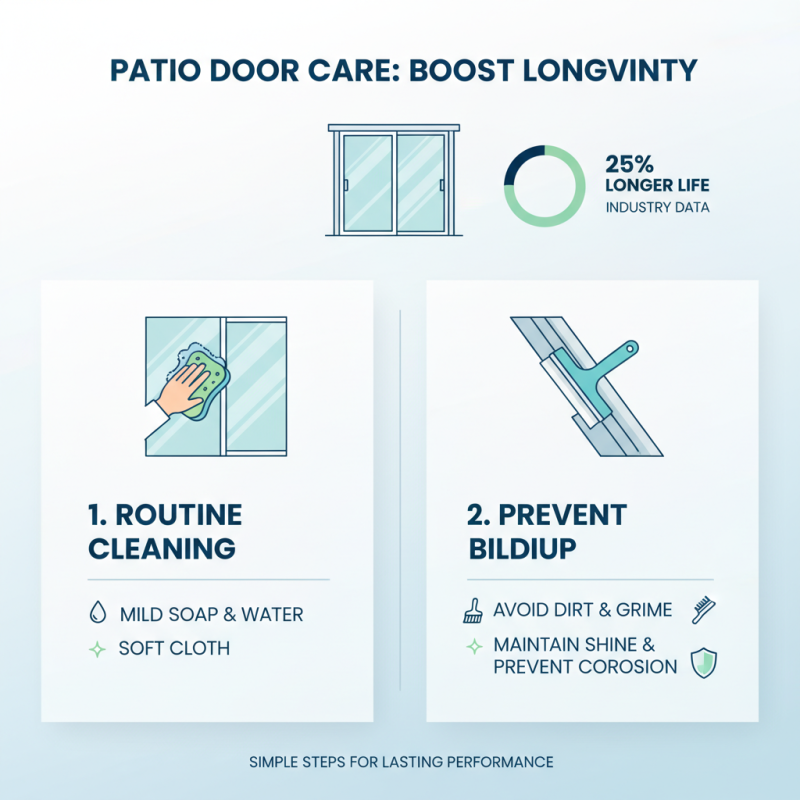
Maintaining your new patio door is crucial for its longevity and performance. According to industry studies, regular upkeep can extend the life of doors by up to 25%. Start with routine cleaning to avoid dirt buildup. Use a mild soap solution and a soft cloth. This simple action helps maintain the door's shine and prevents corrosion.
Inspect the door’s weather stripping at least twice a year. Damaged strips can lead to drafts and energy loss. Replacing them can improve energy efficiency by 10-12%. Ensure that the door frame is free of cracks or chips. Small issues can turn into larger problems if neglected. Regular inspections save you stress and money in the long run.
Consider applying a protective finish. Many experts recommend a sealant for wooden doors. This can help prevent moisture damage. A simple coat every two years can make a big difference. Also, lubricate the hinges and locks to keep everything functioning smoothly. A little maintenance goes a long way in preserving your investment.