Skip to content

Reviews

China Top Small Umbrella Supplier for Global Buyers?

Finding China’s top Small Umbrella supplier requires more than comparing factory prices. Global buyers need dependable construction, clear communication, and evidence of consistent quality. A compact umbrella may look simple. Inside, its ribs, shaft, runner, canopy, and handle must work together under pressure.

“Small umbrellas earn trust through reliable opening, not attractive size alone,” says Laura Chen, an independent umbrella sourcing specialist with experience in Asian rainwear production. Her point is practical. Buyers should inspect opening tests, frame alignment, fabric density, stitching, and handle strength. A supplier’s product photos are useful, but they are not proof. Samples tell a clearer story.

China remains a strong manufacturing base for private-label and promotional umbrellas. Experienced factories can support custom colors, logo printing, packaging, and different folding structures. They may also provide pre-shipment inspections and production records. Still, every supplier deserves careful review. A low quotation can hide thin materials, unstable coating, or weak quality control. That mistake becomes expensive after delivery.

Look for measurable details. Ask about minimum order quantities, sample approval, lead times, defect handling, and carton protection. Check whether the factory understands your destination market’s labeling and safety expectations. Reliable suppliers explain limitations instead of promising everything. That matters.

The best choice is not always the cheapest factory. It is the partner that delivers the same Small Umbrella specification repeatedly. Even careful buyers can miss small defects. A bent rib can damage customer confidence. This guide examines China’s leading suppliers through product quality, manufacturing experience, customization ability, communication, and long-term reliability.
China Top Small Umbrella Supplier for Global Buyers?

China’s Small Umbrella Industry: HS Code 6601 and Product Scope

China Top Small Umbrella Supplier for Global Buyers?

China’s small umbrella industry is widely classified under HS Code 6601. This heading covers folding umbrellas, walking-stick umbrellas, sun umbrellas, garden umbrellas, and similar products. It does not describe one exact product size. Buyers should confirm construction, opening method, fabric, and intended use before classification.

UN Comtrade trade data shows China exported more than US$1 billion of HS 6601 products in 2023. ITC Trade Map also identifies China as a major global supplier in this category. These figures indicate strong manufacturing capacity, but they do not prove consistent quality. That distinction matters.

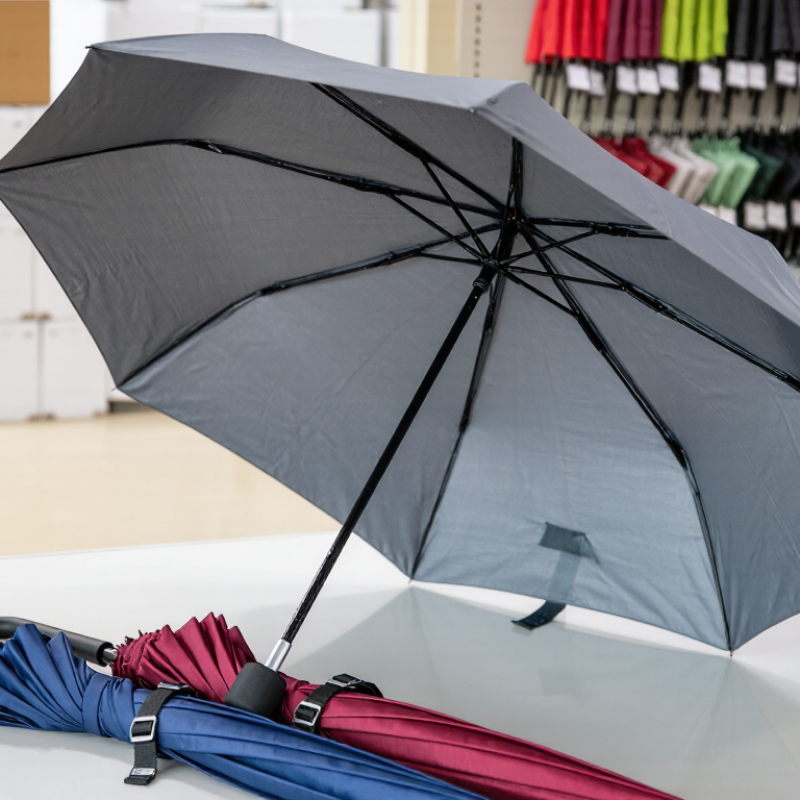
A compact umbrella may use a 53-centimetre canopy, eight fiberglass ribs, an aluminum shaft, and a polyester pongee cover. Manual models often reduce failure points. Automatic models improve convenience but require closer testing of springs and runners. In our sourcing experience, weak rib joints and poor water-repellent finishing cause many early complaints. Packaging is another practical issue. A crushed sleeve can make a good umbrella look defective.

Buyers should request the commercial invoice, packing list, material details, and test records. They should also compare declared product features with HS 6601 requirements. Classification can vary with national customs interpretation. Data reports provide direction, not a final customs decision. I would not rely on catalogue photos alone. Sample testing sometimes exposes uncomfortable gaps.

China’s Small Umbrella Industry: HS Code 6601 Product Scope

HS heading 6601 covers umbrellas, sun umbrellas, walking-stick umbrellas and similar products. Under the HS 2022 structure, the heading contains three six-digit subheadings: garden or similar umbrellas, telescopic-shaft umbrellas, and other umbrellas.

Source: World Customs Organization, Harmonized System 2022, heading 6601. National tariff schedules may add further statistical subdivisions below the six-digit HS level.

China Supplier Product Range: 6-Rib, 8-Rib, and 16-Rib Folding Umbrellas

China Top Small Umbrella Supplier for Global Buyers?

China’s folding umbrella range usually starts with 6-rib, 8-rib, and 16-rib constructions. Each option serves a different buying brief. A 6-rib umbrella is light and compact, making it suitable for handbags and promotional orders. An 8-rib frame offers better balance between portability, wind resistance, and production cost. The 16-rib design feels more structured, with improved canopy tension and a fuller opening.

Market data supports continued demand for practical rain protection. Grand View Research estimated the global umbrella market at approximately USD 7.2 billion in 2023, with steady growth projected through 2030. UN Comtrade records umbrellas under HS Code 6601, confirming substantial international trade activity in this category. These figures do not prove that every folding model will sell well. They only show a durable market foundation.

In supplier evaluations, buyers should inspect rib thickness, shaft alignment, fabric density, and opening tests. A 16-rib frame may look stronger, but it can increase weight and packing volume. A 6-rib model may reduce freight costs, yet feel less stable in strong rain. That trade-off matters. Factory sampling should include repeated manual opening, canopy water testing, and carton compression checks. ISO 811:2019 provides useful guidance for textile water-resistance testing, although it does not replace product-specific inspection. One practical mistake is judging umbrellas by rib count alone. Handle comfort and closure quality are often overlooked.

Quality Benchmarks: 190T Polyester, UPF 50+, and Wind-Resistance Tests

For global buyers, a small umbrella should pass measurable quality checks, not rely on attractive specifications. A 190T polyester canopy usually offers a practical balance between weight, weave density, and durability. However, “190T” is not a complete quality guarantee. Buyers should verify fabric weight, coating uniformity, seam strength, and colorfastness through laboratory records.

Sun protection needs careful interpretation. AS/NZS 4399:2017 classifies UPF 50+ fabric as transmitting no more than 2% of measured ultraviolet radiation. This supports strong fabric-level protection. It does not guarantee equal protection around the umbrella’s edges. Openings, low sun angles, and reflected surfaces still matter. In field inspections, I would check canopy coverage at several angles, not only the label. Small umbrellas can leave shoulders exposed.

Wind performance also requires documented testing. ISO 5912:2021 provides requirements and test methods for non-automatic umbrellas, including functional performance and structural behavior. A reliable supplier should identify the tested configuration, wind conditions, failure point, and recovery after use. Ask whether the test used the finished umbrella, not just separate ribs or fabric. This distinction is often missed. Real-world gusts remain unpredictable, and a laboratory pass cannot promise complete storm resistance. Supplier audits should include repeated opening cycles, shaft alignment, rib joints, and canopy stitching. Some reports look impressive. The details may be thin.

Export Sourcing Metrics: MOQ, 15–30-Day Lead Times, and Incoterms

China Top Small Umbrella Supplier for Global Buyers?

Small umbrella sourcing depends on practical export metrics, not attractive product photos alone. Experienced buyers should confirm minimum order quantity before requesting detailed quotations. Many factories set MOQs by color, fabric, handle, or packaging design. A basic model may accept mixed colors, while customized packaging often requires a higher quantity. Ask for the exact MOQ per specification.

Production commonly takes 15–30 days after sample approval, deposit receipt, and artwork confirmation. This window can change during peak seasons or when materials need special treatment. Build in extra time for inspection and domestic transport. Do not promise a fixed shipping date too early. We have seen delays caused by one missing carton mark.

Incoterms must be written clearly in the quotation. EXW usually leaves more transport work with the buyer. FOB may simplify port handover, but destination charges remain separate. CIF can include freight and insurance to the named port, yet it does not cover every local fee. Confirm the named place, insurance scope, export documents, and payment schedule. A reliable supplier should provide a production timeline, packing details, and inspection access before shipment. Still, paperwork can be imperfect. Recheck every figure.

China Top Small Umbrella Supplier for Global Buyers? — Export Sourcing Metrics: MOQ, 15–30-Day Lead Times, and Incoterms
Sourcing Dimension Common Market Range Typical Buyer Requirement Export-Sourcing Consideration Practical Verification Point
Product Type Manual folding, automatic folding, 3-fold, 5-fold, mini, and UV-protection umbrellas Compact closed length of approximately 17–30 cm for travel and retail use Smaller umbrellas reduce carton volume but may require more attention to frame strength and wind resistance Request open diameter, closed length, folded weight, rib count, and frame material
MOQ for Standard Designs 500–1,000 pieces Suitable for catalog colors and existing constructions Standardized components generally support lower MOQs and faster production scheduling Confirm whether the MOQ applies per color, per size, or per total order
MOQ for Custom Printing 1,000–3,000 pieces Suitable for one-color or multi-color logo printing Artwork setup, screen preparation, color matching, and inspection can affect the minimum quantity Approve a digital artwork proof and a pre-production sample before bulk manufacturing
MOQ for Fully Custom Construction 3,000–5,000+ pieces Required for custom fabric, handle, mechanism, packaging, or structural specifications New tooling and special components may increase both cost and development time Obtain a written tooling quotation and clarify ownership of custom molds or fixtures
Sample Lead Time 5–10 calendar days for standard samples Pre-production sample approval before bulk ordering Custom printing, special materials, and complex packaging may extend the sample schedule Confirm whether sample fees and courier charges are refundable or credited against the order
Bulk Production Lead Time 15–30 calendar days after sample and artwork approval Common planning window for standard small umbrellas Lead time normally excludes public holidays, inspection delays, and international transit Define the production start date as the date of deposit, final approval, or both
Peak-Season Buffer Add 7–15 days Recommended for pre-summer, rainy-season, and promotional campaigns Factory capacity, fabric availability, port congestion, and holiday shutdowns can affect schedules Request a production calendar and reserve capacity before issuing the purchase order
Common Payment Structure Usually 30% deposit and 70% balance before shipment Payment terms should be stated in the pro forma invoice Longer-term buyers may negotiate inspection-based balance payment or documentary terms Verify beneficiary details independently before sending funds and match them to the signed contract
EXW — Incoterms® 2020 Buyer-controlled pickup Buyer arranges pickup, export clearance, main transport, insurance, and import clearance Provides maximum control but places substantial logistics responsibility on the buyer Confirm the exact named place and whether the seller can legally assist with export formalities
FOB — Incoterms® 2020 Sea or inland-waterway freight Seller clears goods for export and loads them on board the nominated vessel Buyer manages main carriage, insurance, import clearance, duties, and destination delivery Use the named port and clarify who pays origin terminal, documentation, and local handling charges
CIF — Incoterms® 2020 Sea freight with seller-arranged insurance Seller pays cost, insurance, and freight to the named destination port Risk transfers when goods are loaded on board, even though the seller pays freight to destination Check the insurance coverage, destination port charges, and whether inland delivery is excluded
DAP — Incoterms® 2020 Delivered to named place Seller arranges transport to the agreed destination; buyer handles import clearance and duties Useful when buyers need delivery coordination but can manage local customs procedures State the complete delivery address and identify responsibility for unloading
DDP — Incoterms® 2020 Delivered duty paid Seller handles transport, export, import clearance, duties, and delivery to the named place Convenient for buyers, but availability and legal feasibility depend on the destination country Confirm who acts as importer of record and request a transparent breakdown of taxes and duties
Packaging Configuration Typically 1 piece in a polybag or sleeve; export cartons commonly contain 24–60 pieces Retail-ready packaging or neutral export cartons according to the purchase order Packaging affects cubic volume, freight cost, barcode compliance, and product protection Approve carton dimensions, gross/net weight, carton marks, barcode format, and drop-test requirements
Quality Inspection Points Appearance, opening and closing function, frame alignment, fabric stitching, handle security, and logo placement Inspection before shipment using an agreed sampling plan Functional checks are important because visual inspection alone may not identify mechanism defects Specify acceptable quality limits, inspection level, defect classification, and corrective-action procedure
Typical Export Documents Commercial invoice, packing list, transport document, and certificate of origin when required Documents must match the purchase order and customs declaration Incorrect HS classification, weights, quantities, or consignee information can delay clearance Review draft documents before shipment and confirm destination-country import requirements
Freight Planning Small orders are often compared across courier, air freight, and consolidated sea freight Select transport according to urgency, order volume, and landed-cost target Air freight is faster; sea freight is generally more economical for larger carton volumes Compare total landed cost, including origin charges, freight, insurance, duties, and destination fees

Note: The ranges above are indicative market-planning benchmarks for small umbrella export sourcing rather than quotations from a specific supplier. Final MOQ, pricing, lead time, documentation, and Incoterms® responsibilities must be confirmed in the supplier’s written quotation and sales contract.

Supplier Verification: AQL 2.5 Inspection, Factory Audits, and Compliance Documents

China remains a practical sourcing base for small umbrellas, but supplier verification requires more than attractive samples. An AQL 2.5 inspection should follow ISO 2859-1 sampling procedures. Buyers should define lot size, inspection level, and defect limits before production. Inspectors check opening force, canopy stitching, rib alignment, handle strength, and closing performance. A bent rib can appear minor, yet it may create a safety concern.

AQL is not a promise of zero defects. That point is often misunderstood. The inspection report should record accepted, rejected, and reworked quantities, with photographs and batch references. The ISO Survey 2022 recorded more than 1.26 million ISO 9001 certificates worldwide. Certification shows a management system, not automatic product quality. Auditors must still verify production records, calibration logs, incoming-material controls, and final packing procedures.

A factory audit should include worker conditions, fire exits, subcontracting controls, traceability, and corrective-action records. Compliance files should match the actual umbrella model and destination market. Request business registration, material test reports, restricted-substance results, packaging declarations, and recent social-audit documents. Check dates and issuing laboratories carefully. A recycled-fabric claim without supporting evidence deserves questioning. Documents can be genuine but outdated. We have seen suppliers pass a sample review while changing fabric or metal parts during mass production. That weakness is easy to miss, and it deserves a second inspection before shipment.