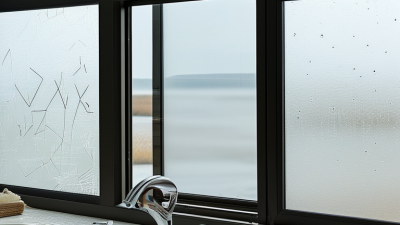
China Best Patio Door Manufacturers and Suppliers
China’s patio door industry is becoming more competitive, export-focused, and technically mature. Manufacturers now combine slim aluminum frames, insulated glass, multi-point locks, and low-maintenance finishes. These details matter in real homes, where coastal air, heavy rain, and daily sliding can expose weak components quickly.
The U.S. Department of Energy reports that windows and doors can account for 25% to 30% of residential heating and cooling energy use. This figure shows why thermal breaks, weather seals, and accurate installation deserve serious attention. Grand View Research’s 2024 doors market analysis also identifies energy efficiency, renovation activity, and modern architectural design as important market drivers. However, market reports cannot replace factory inspection. A beautiful catalog image proves very little.
As FGIA technical expert J. Scott Long has emphasized, “Installation is a critical part of product performance.” The point is easy to overlook. Even a well-tested patio door may leak or operate poorly when the opening is mismeasured. Experienced Chinese suppliers therefore need more than production capacity. They should demonstrate testing records, material traceability, quality-control procedures, and export experience.
Some buyers still compare only prices. That approach can become expensive. Hardware quality, glass configuration, drainage design, and after-sales support often decide the real cost. This guide examines leading China patio door manufacturers and suppliers through those practical factors. It also recognizes an uncomfortable limitation: no single supplier fits every climate, project budget, or certification requirement. Careful verification remains necessary.
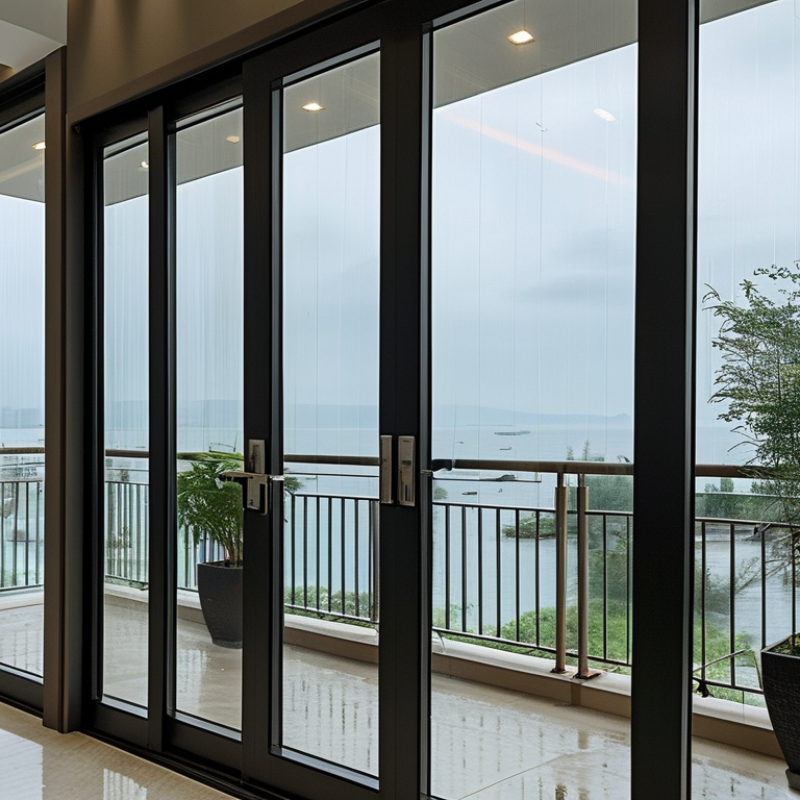
Types of Patio Doors Made in China
Types of Patio Doors Made in China
Chinese patio door manufacturers commonly produce sliding, lift-and-slide, folding, French, and multi-slide systems. Sliding doors suit compact balconies because one panel moves behind another. Lift-and-slide doors use rollers and locking hardware to support heavier glass panels. Folding doors can open wider, but their hinges and tracks need careful alignment. French patio doors offer a familiar appearance, although their swing area requires more room.
Material choices include thermally broken aluminum, uPVC, wood, and aluminum-wood composites. Aluminum provides slim sightlines and strong frames. uPVC can improve insulation in moderate climates. Low-emissivity glass, argon-filled units, warm-edge spacers, and multi-point locks are also common specifications. The U.S. Department of Energy reports that windows can represent about 25% to 30% of residential heating and cooling energy use. Patio doors deserve similar attention, especially when they face strong afternoon sun.
The International Energy Agency’s 2023 Global Status Report for Buildings and Construction states that buildings consumed about 30% of global energy in 2022. This makes glazing performance more than a decorative choice. Buyers should request tested U-factor, solar heat gain, air leakage, and water penetration results. Factory photographs help, but they are not proof. I have seen attractive doors fail because drainage channels were too shallow. A better specification includes installation tolerances, hardware cycles, glass composition, and climate exposure. Regional performance can vary, so one standard package may not fit every project.
Key Standards for Evaluating Chinese Patio Door Manufacturers
Evaluating Chinese patio door manufacturers requires evidence, not attractive catalogs. Start with standards matching the destination market. Ask for current test reports covering air leakage, water penetration, wind resistance, and thermal transmittance. EN 14351-1, ASTM E283, and ASTM E331 provide useful references. However, acceptance depends on the project specification. Reports should identify the exact profile, glass, seal, hardware, and test date.
IEA’s Buildings 2023 report states that buildings consume about 30% of global final energy. Therefore, U-value evidence is more than a marketing detail. Request frame and glass calculations for the complete door assembly. A reliable factory can show incoming inspection records, nonconformance data, corrective actions, and batch traceability. Do not accept only a passing sample. Inspect weld corners, drainage paths, roller adjustment, and gasket compression on physical units. Measure several doors, not one showroom sample. ISO 9001 certification helps, but its scope and surveillance status still require checking.
The World Bank’s 2023 Logistics Performance Index gave China a score of 3.7 out of 5. That national figure cannot predict one supplier’s export discipline. Review packing photos, loading procedures, labeling, spare-part control, and previous shipment records. Use an independent laboratory when claims appear unusually strong. I would also request installation manuals with tolerances, not vague diagrams. A polished sample can hide weak corner finishing. That remains a common risk. Suppliers should explain how they handle damaged glass, delayed components, and repeated defects. Their response quality often reveals more than their brochure.
Leading Manufacturing Regions and Supplier Capabilities
China Best Patio Door Manufacturers and Suppliers
Leading Manufacturing Regions and Supplier Capabilities
China remains a major sourcing base for patio doors. UNIDO’s 2024 Industrial Statistics Yearbook places China’s share of global manufacturing value added above 30% in 2023. This scale supports deep supply networks for aluminum profiles, insulated glass, rollers, locks, and weather seals.
Regional strengths differ. Guangdong suppliers often combine extrusion, CNC machining, surface finishing, and export packing. Zhejiang and Jiangsu factories commonly focus on glass processing, thermal-break systems, and automated assembly. Shandong offers strong capacity for large-format frames and architectural fabrication. These patterns are useful, but not absolute. A capable supplier may operate across several provinces.
Production equipment matters. Look for low-emissivity glass lines, argon filling, thermal-break crimping, and controlled powder coating. The International Energy Agency reports that buildings account for about 30% of global energy demand, making airtightness and glazing performance important purchasing factors. Suppliers should provide U-value, solar heat gain, air leakage, water penetration, and wind-load test results.
Ask for recent inspection records. Check corner joints, drainage paths, roller movement, and packaging protection. Sample doors can look excellent. Production consistency is harder. ASTM, EN, or local test reports should match the actual profile, glass, hardware, and dimensions offered. One weakness remains common: attractive catalogs sometimes explain testing less clearly than finishes. That deserves scrutiny.
How to Compare Products, Prices, and Customization Options
China Best Patio Door Manufacturers and Suppliers
When comparing patio door suppliers in China, begin with performance, not attractive photos. Check frame material, glass thickness, thermal ratings, drainage design, and roller quality. Ask for test reports that match the exact model you may order. A sample door should open smoothly, close evenly, and remain stable after repeated use. Small details matter. Measure the frame, threshold, locking points, and screen clearance before discussing prices.
Price comparisons often become misleading. Request itemized quotations for the same size, glass type, finish, hardware, packaging, and delivery terms. Confirm whether installation guidance, replacement parts, and warranty support are included. In project reviews, a low quote often excludes essential hardware or stronger glass. That can create higher costs later. I have also seen buyers overvalue a polished sample while ignoring inconsistent production records. Factory audits, inspection photos, and clear quality procedures provide stronger evidence.
Tips: Prepare one specification sheet for every supplier. Include drawings, opening direction, color codes, glass requirements, and target quantities. Ask for customization limits, minimum order quantities, tooling charges, and realistic lead times. Keep written records of every revision. A spreadsheet helps, but it can still hide assumptions. Recheck everything before approval.
Quality Checks, Certifications, and Export Considerations
China Best Patio Door Manufacturers and Suppliers: Quality Checks, Certifications, and Export Considerations
Reliable patio door sourcing starts with measurable factory controls, not attractive samples.
The U.S. Department of Energy reports that windows and doors can cause 25–30% of residential heating and cooling energy use. Therefore, suppliers should verify frame insulation, glass performance, weather seals, and installation tolerances. Request test records for air leakage, water penetration, and structural pressure under ASTM E283, E331, and E330 procedures. Small details matter. A 1 mm frame gap can affect sealing performance.
Independent inspection should cover aluminum thickness, corner joints, roller durability, drainage holes, and hardware cycles. The Fenestration and Glazing Industry Alliance recommends performance testing through controlled laboratory methods, while NFRC procedures support credible U-factor and solar heat gain ratings.
Ask whether results apply to the complete door system, rather than glass alone. This distinction is often missed. In my experience, packaging failures create more claims than visible production defects.
For export orders, check CE or UKCA needs, destination building codes, labeling rules, and timber-packaging requirements. Energy documentation should match the destination market. The International Energy Agency reports that buildings represent about 30% of global final energy consumption, increasing pressure for efficient products. Suppliers should provide drawings, bills of materials, inspection photos, certificates, and container-loading records. Yet certificates are not proof of every shipment. Batch sampling remains necessary, and buyers should reserve time for corrective actions. That costs less than replacing damaged doors overseas.
 Skip to content